
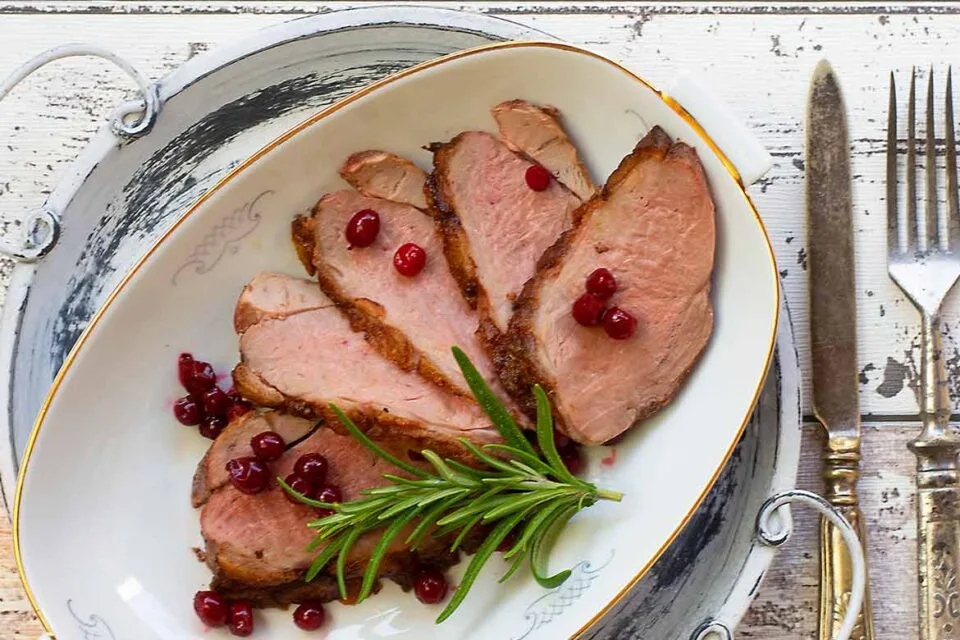
A roasted duck breast impresses the dinner guests. Roasting a duck breast fillet is very simple but it is a disciplined process. With this recipe, you’re sure to succeed. The duck fat melts as it fries in the pan. That excellent fat is worth saving. It can be used to fry the potatoes for example.
This is a dish that looks far more impressive than the effort it takes — it’s genuinely one of the easier ways to serve something restaurant-quality at home, provided you follow the process rather than rushing it. Two duck breasts make a good dinner-for-two centerpiece, paired with something simple like roasted potatoes fried in the saved duck fat and a sharp berry sauce to cut through the richness.
Why Duck Breast Starts in a Cold Pan
The single most important step here is starting the duck breast fat-side down in a completely cold pan, not a preheated one. This lets the thick layer of fat render slowly as the pan heats up, basting the meat in its own fat and rendering the skin into a thin, crisp layer instead of leaving it thick and rubbery. Scoring the fat in a tight cross-hatch pattern before cooking is what lets that fat render evenly and gives the crust somewhere to crisp into.
How to Make Roasted Duck Breast
Take the refrigerated duck breast fillet to a cutting board. On the fat side, slice dense cross-hatch cuts with a sharp knife, going deep enough to reach the meat. Rub the salt, sugar, and pepper thoroughly into the fat and leave the duck breast at room temperature for half an hour. Choose a frying pan — cast iron works best here — and place the duck breast fat side down in the cold pan before turning the heat to medium. As the pan heats, the fat will start to render, so no extra oil is needed. Tuck a sprig of rosemary into the rendering fat for extra flavor, and fry until the fat side has shrunk down to a thin, crisp layer, about 5–10 minutes, watching closely so it doesn’t burn.
Pour off the excess fat and turn the fillet over. Insert a thermometer into the thickest part and cook until the internal temperature reaches 54°C (129°F) for a rosé, juicy center. Without a thermometer, about 3 more minutes on this side is a reasonable guide. Wrap the meat in foil and let it rest for 10 minutes before slicing. Serve with cranberries or lingonberries and a sprig of rosemary.
FAQ – Frequently Asked Questions
How long does roasted duck breast keep in the fridge?
Cooked and stored in an airtight container, it keeps for about two days. Reheat gently to avoid overcooking the meat past its rosé center.
Can I prepare duck breast ahead of time?
The scoring and seasoning can be done a few hours ahead and kept in the fridge, but the actual cooking is best done just before serving so the skin stays crisp.
Can I freeze cooked duck breast?
It’s not ideal — the crisp skin loses its texture after freezing and reheating. If you do freeze it, expect the skin to soften noticeably.
What internal temperature should duck breast be cooked to?
54°C (129°F) gives a rosé, juicy center. For more well-done meat, aim for 58–60°C (136–140°F), though the texture will be firmer and less juicy.
What wine pairs well with roasted duck breast?
A medium-bodied Pinot Noir is the classic match, echoing the tartness of the cranberries, though a Syrah or a lighter Malbec also works well with the rich fat.
Learn More
Read more about duck as an ingredient: https://en.wikipedia.org/wiki/Duck_as_food
Roasted Duck Breast
Ingredients
- 1 fillet of duck breast
- 1 teaspoon salt
- ½ teaspoon sugar for flavour (optional)
- ½ tsp ground black pepper
- fresh rosemary
- 50 g cranberries or lingonberries
Instructions
- Take the refrigerated duck breast fillet to a cutting board. On the fat side, slice dense cross cuts with a sharp knife. The cuts should go deep, right on the meat.
- Rub the spices thoroughly into the fat and leave the duck breast at room temperature for half an hour.
- Choose a frying pan. Cast iron is best for this recipe.
- Place the duck breast on the cold pan, fat side down. Set the plate heat to half heat. Soon the fat will start to melt, so no extra oil is needed for frying. Cut a sprig of rosemary into the fat to add flavour.
- Fry until the fat side of the fillet has shrunk to a thin crisp (5-10min). Do not burn the duck.
- Pour off the excess fat and turn the fillet over. Insert a thermometer into the thickest part and bake until the internal temperature reaches 54C. If you do not use a thermometer, leave to fry for about 3 minutes. The result should be a rosee coloured, juicy meat inside the fillet.
- Wrap the meat in foil to rest for 10 minutes. Slice the duck and serve with cranberries and rosemary.
Notes
- Start the duck breast in a completely cold pan, not a preheated one — this is what renders the fat evenly into a crisp skin.
- Score the fat in a tight cross-hatch pattern, cutting deep enough to reach the meat but not into it.
- Save the rendered duck fat — it’s excellent for frying potatoes or roasting vegetables.
- Use a thermometer if you have one; 54°C gives a reliably juicy, rosé center every time.
- Don’t skip the resting step — 10 minutes wrapped in foil lets the juices redistribute before slicing.
Nutrition
This post is also available in:
 Suomi
Suomi
