
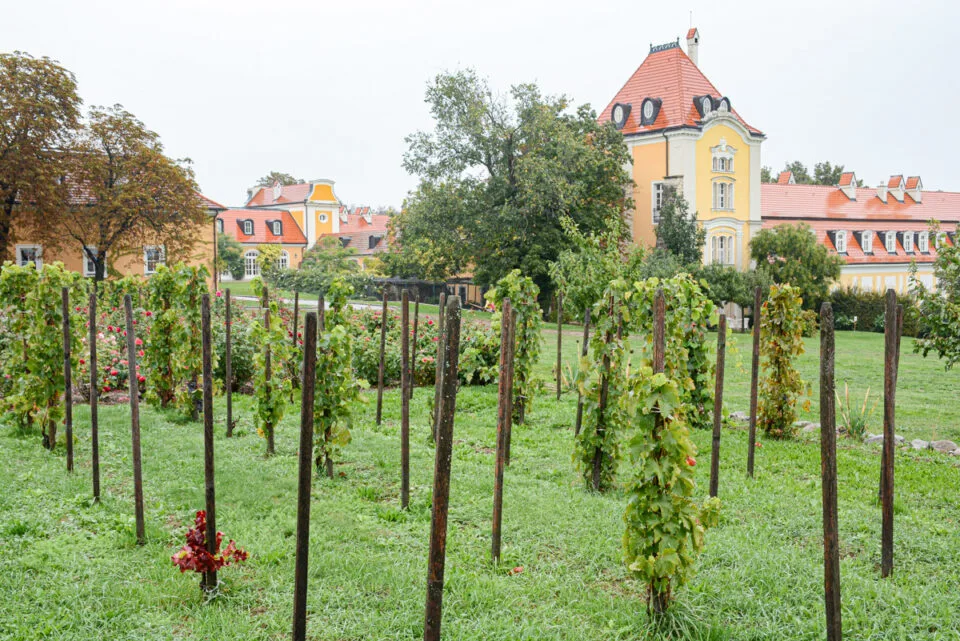
Ask most wine lovers to name a Central European wine country and they will reach for Austria, perhaps Hungary, maybe the Germany. Slovakia rarely makes the list. Yet behind that quiet reputation lies a country with a long viticultural history, six distinct wine regions, a fascinating portfolio of home-bred grape varieties, and a generation of producers whose wines stand up to anything from across the Austrian border.
This article is a consolidated AI English-language adaptation of a three-part Slovak wine series (in Finnish) originally published on Flavorado in 2015.
The first prejudice to bury is geographic. Slovaks do not speak of Eastern Europe; they call themselves Central European, and the wines reflect that orientation. What you find today is a country making elegant modern whites, increasingly polished reds, world-class rosés, traditional-method sparklings, and — yes — its own slice of historic Tokaj, shared with neighbouring Hungary.
A short history of Slovak wine: from Celts to Noma
Vines reached the territory of present-day Slovakia long before our era, planted by Celtic tribes moving south. Romans, monastic orders, and Habsburg monarchs all pushed cultivation forward, and the first significant private estates appeared in the 19th century.
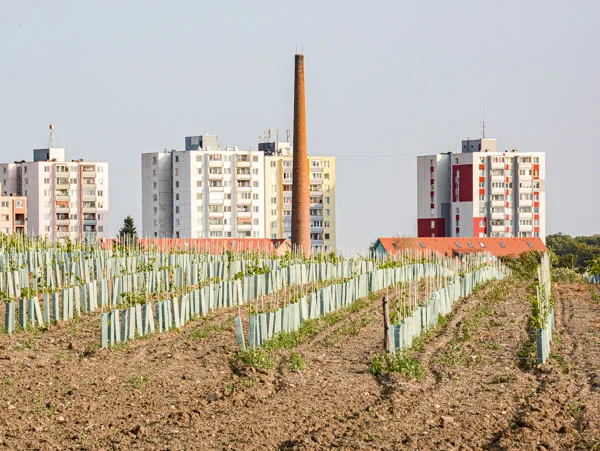
Then the 20th century intervened. Post-war socialism gutted Slovak agriculture, and you can still see its legacy in older vineyards: vines planted four metres apart, scattered haphazardly across plots, pruned without any clear plan. The modern story of Slovak wine really begins after 1990, when legislation finally became workable and investment capital returned after decades of stagnation.
The turn-of-the-millennium harvest was when the reset became visible. International medals started arriving from competitions across Europe. Robert Parker awarded Château Belá’s 2001 vintage Riesling 94 points and the wine entered the record books as the first Slovak bottle ever exported to the United States. A few years later, Strekov’s orange wine Porta found its way onto the wine list at Noma in Copenhagen — the kind of validation no marketing campaign can buy.
The six wine regions of Slovakia
Slovakia is geologically Europe in miniature: river plains, rolling hills, mountain slopes, soils ranging from clay to granite. The country sits at the northern edge of viable European viticulture, but its continental climate is more predictable than a maritime one, with cold winters, warm summers, and a long autumn that suits late-harvest wines.
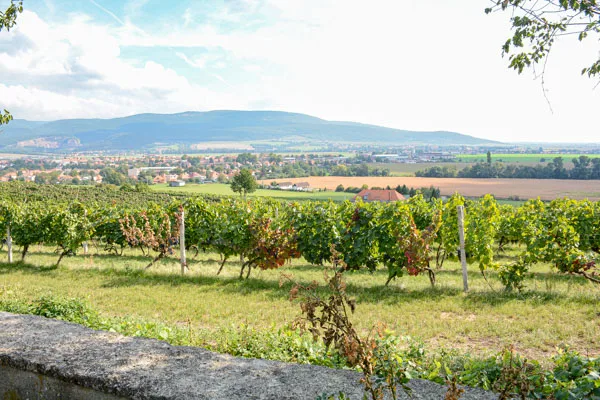
Six historical wine regions, divided into 40 sub-regions and 603 communal areas, produce wines under the PDO classification (with its national synonym, Districtus Slovakia Controlatus, or DSC):
Slovak Wine region map on JancisRobinson.com
- Malokarpatská — the Small Carpathians, the largest region by hectarage, just northeast of Bratislava
- Južnoslovenská — Southern Slovakia, the warmest region, bordering Hungary on loess and sandy soils
- Nitrianska — the Nitra region, a mosaic of rivers, low hills, and varied soils from clay to granite
- Stredoslovenská — Central Slovakia, with volcanic and loamy soils
- Východoslovenská — Eastern Slovakia, fragmented and volcanic
- Tokajská — the Slovak share of the famous Tokaj region
A German-style classification by must weight also exists in parallel:
- neskorý zber — late harvest (Spätlese)
- výber z hrozna — grape selection (Auslese)
- bobuľový výber — berry selection (Beerenauslese)
- hrozienkový výber — dried berry selection (Trockenbeerenauslese)
- cibébový výber — botrytised berry selection, the Slovak equivalent of Tokaj’s aszú
- ľadové víno — ice wine
- slamové víno — straw wine
The grapes behind Slovak wine
Slovakia grows most of the internationally familiar varieties — Riesling (locally Rizling Rýnsky), Grüner Veltliner (Veltlínske zelené), Pinot Blanc and Gris, Chardonnay, Sauvignon, Gewürztraminer for whites; Cabernet Sauvignon, Pinot Noir, and Blaufränkisch (Frankovka modrá) for reds. They are often very well made.
But the real curiosity of Slovakian wines lies in the country’s own grapes. Born in 1930, Dorota Pospíšilová is a botanical Einstein who studied agriculture and genetics, became fascinated by grape crossings, and has registered 24 new varieties under her name. She gave them Slovak river names — a clever way to keep their origin recognisable even as they crossed political borders, and a familiar handle for local consumers picking bottles off a shelf.
A working tasting list of Slovak indigenous and adopted curiosities looks something like this:
- Devín (Gewürztraminer × Roter Veltliner) — tropical, gently spicy whites
- Pálava (Müller-Thurgau × Gewürztraminer) — aromatic, mango-to-melon whites with spice on the finish
- Noria (originally thought to be Riesling × Sémillon, though modern DNA suggests otherwise) — exotic fruit, hints of banana
- Breslava (Gewürztraminer × Santa Maria Alcantara) — aromatic and distinctive
- Lipovina — best known as a Tokaj blending grape, but capable of fine dry varietal wines
- André (Blaufränkisch × Saint-Laurent) — light, elegant reds with soft tannins
- Alibernet (Alicante Bouschet × Cabernet Sauvignon) — bred in Ukraine and entirely at home in Slovakia. One of the rare dark grapes whose juice itself runs nearly black. Deep, blueberry-laden, capable of muscular oak-aged reds and remarkable sweet versions
- Dunaj (Muškát Bouchet × Oporto × Saint-Laurent) — opaque, full-bodied, tannic; with extended oak ageing it produces seriously dense reds
For any visiting red wine lover, Alibernet and Dunaj are the two grapes worth seeking out. They are unlike anything else in Europe.
Eight producers shaping modern Slovak wine
Pavelka — elegance from the Small Carpathians
VPS Company — Viniculture Pavelka and Son — was founded in 1995 outside the town of Pezinok, on dry south-facing slopes of granite, sand, and clay. Father Milan and son Michal farm 50 hectares and produce around 500,000 bottles a year, spread across some 26 different labels — a typical situation among Slovak wine producers, driven by domestic consumers who want constant novelty.
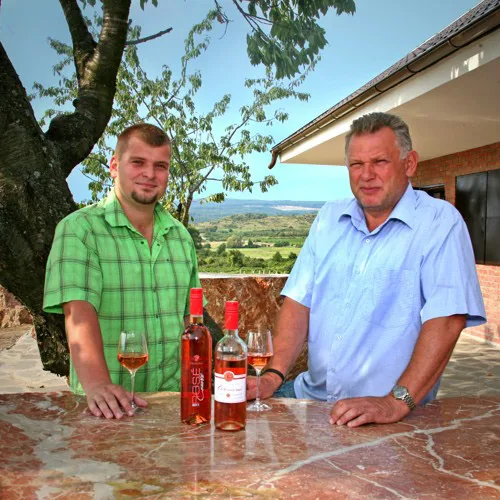
The style is the point. Pavelka’s whites are quietly elegant and minerally, never overworked. Large oak casks are used to open up the grape’s own aromatics, not to layer on vanilla. The reds carry depth without weight, with a silky finish. And the rosé — a 50/50 Cabernet Sauvignon and Blaufränkisch with four hours of skin contact and a crisp 6.6 g/l acidity — is among the best I have tasted anywhere. pavelkavino.sk
Karpatská Perla — the pearl of the Carpathians
“Vineyard is the birthplace of pearls.” Margita and Ladislav Šebo founded Karpatská Perla in 1991 on a family vineyard near Modra, and the estate has twice been named Slovak Winery of the Year (2011, 2012). They farm 50 hectares across plots within a 15-kilometre radius, plus around 30 percent of grapes bought from a co-operative they are closely involved with.
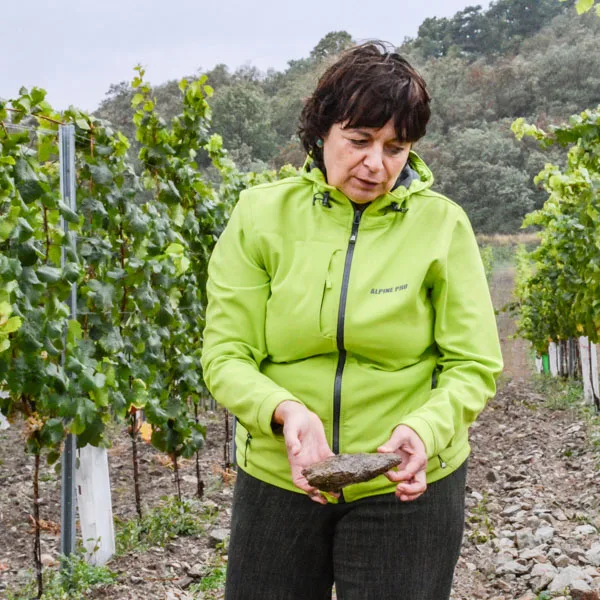
Their flagship site, the 28-hectare Suchý vrch (Dry Hill), was replanted from 2001 onward — first with grapes that already had a following in 1980s Czechoslovakia (Moravian Muscat, Pálava, Devín, Aurelius, André), then with classics like Riesling, Pinot Noir and Pinot Gris from 2006. On the clay-stone plots at Noviny, Grüner Veltliner vines are 30 to 40 years old.
The cellar marries modern technique to traditional ageing — cold maceration (introduced as early as 2003 to lock in freshness), stainless steel alongside 3,000-to-10,000-litre old oak foudres for whites, and French barriques for reds. The respected enologist Fedor Malík, a close collaborator, has isolated the cellar’s first native wild yeast, with promising early results. Twenty labels in total, divided into five clean ranges — modest by Slovak standards, and all the better for it. karpatskaperla.sk
Mrva & Stanko — the perfectionists
Two friends, one obsession. Vladimír Mrva — a viticultural perfectionist — and Peter Stanko — with a background in advertising — joined forces in 1997 to change perceptions of Slovakian wines. They have largely succeeded. Mrva & Stanko has been crowned Slovak winery of the year in 2010 and 2013, and production has grown from 12,000 bottles to 450,000 in a vast modern complex in Trnava, complete with a breathtaking barrel hall and private wine lockers for regular customers in the old-style brick cellar.
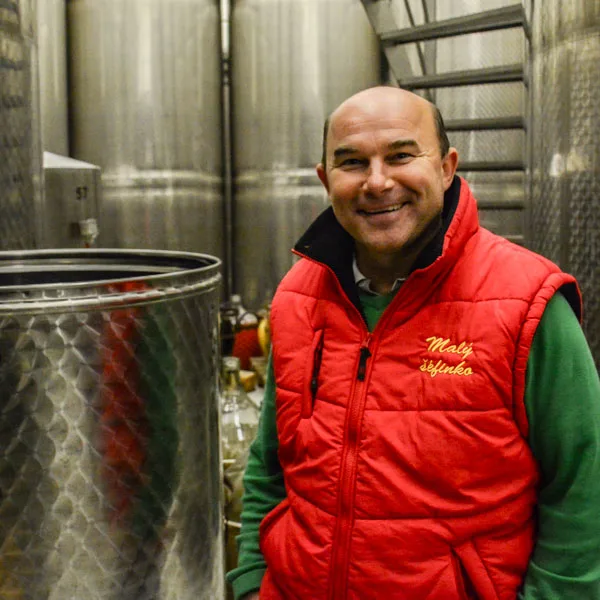
The estate has no vineyards of its own; instead Mrva works with contracted growers under exceptionally tight supervision. The brand is guarded jealously — when the rainy 2014 vintage didn’t meet his standards, Mrva simply decided the reds wouldn’t be released, full stop.
He is particularly devoted to the cool, low-pH plots at Čachtice in the northern Small Carpathians, where Pinot Gris, Sauvignon, Gewürztraminer, Chardonnay, and Pinot Noir give fresh, vivid, high-acid wines. The reds show that rare quality of oak handling where the wood is felt rather than tasted. The Winemaker’s Cut (WMC) range is worth following closely. mrvastanko.sk
Elesko — Slovak wine on the world stage
A short drive north of Modra stands one of the country’s most ambitious ventures: a vast 2009-built complex of marble, tile, and concrete that houses production, an excellent restaurant, a wine shop, and an art museum (Zoya, with a serious Andy Warhol collection). There are sizeable, slightly Miami Vice-styled guest rooms, and in September visitors can wander a “vine gallery” behind the main building to taste dozens of varieties straight from the plant.
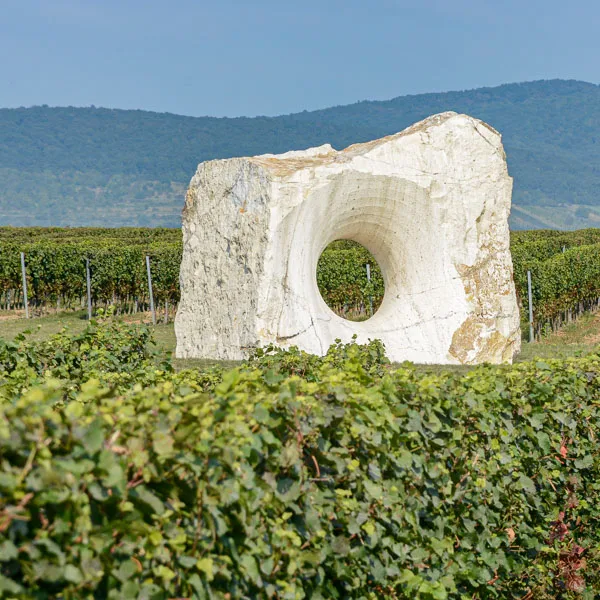
Elesko farms around 100 hectares in the Small Carpathians plus 25 hectares in Tokaj. The winemaking team has included New Zealander Nigel Davis and, as consultant, none other than Germany’s Dr Ernst Loosen. From its first vintage in 2008, the estate has been built for export, and Elesko wines now travel to China, Malaysia, Taiwan, Russia, France, the Netherlands, and Poland while the rest of the Slovak wine industry has been slowly prising open international doors. elesko.sk
Château Topoľčianky — scale creates freedom
Founded in 1933, Château Topoľčianky produces around six million bottles a year — by some distance the country’s largest winery. Over 500 hectares of estate vineyards in the Nitra region grow everything from Grüner Veltliner and Pinot Blanc to Slovak specialities like Pálava, Devín, Alibernet, and Dunaj.
The cliché in winemaking is “quality over quantity.” Sitting across from young marketing director Samuel Waldner, I heard something more interesting:
“Scale gives us the freedom to develop. We don’t collapse if we plant a new variety on the wrong soil for a few hectares, or if we leave part of the harvest too long while trying a risky new approach. If it doesn’t work, we pour the batch down the drain and try again next autumn. Size means freedom to experiment — we don’t have to sell every drop just to survive.”
That freedom shows. The portfolio is enormous — well over a hundred labels — but it includes some genuinely arresting wines: a long-aged 1996 Pinot Blanc still in fine form, a rare red Ice Wine from Blaufränkisch, and a striking Alibernet straw wine. vinotop.sk
Velkeer — the new generation of Slovak wine
Tomáš Sládeček is exactly the kind of producer Slovakia needs more of. Young, knowing his country’s complicated recent winemaking history through his parents’ experience, and entirely confident in its future. The estate sits in Veľký Kýr, in the Nitra region, on a hilltop that looks out over a village whose roots reach back to Roman times.
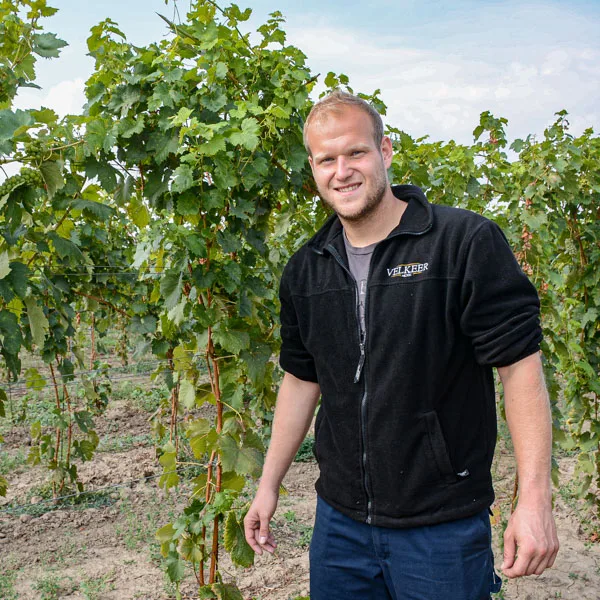
Velkeer’s holdings have just been expanded by ten new hectares — Welschriesling, Riesling, Dunaj, Blaufränkisch, and some Cabernet Sauvignon mostly for rosé blending. A few kilometres away in Tvrdošovce, a separate plot has proved excellent for Chardonnay, and the estate also buys grapes from the nearby Vinodol hill. Total production is deliberately small, around 40,000 bottles, and Tomáš sees no need to grow it beyond perhaps half as much again, even with the new plantings.
That restraint matters, because it allows him to work the way he wants to: hand-harvesting, slow pressing, steam-cleaning tanks and barrels rather than reaching for chemicals, and experimenting with ageing in barrels of native Slovak acacia. The wines reflect the man himself — generous and characterful. The Riesling–Pinot Blanc cuvée (with the Riesling component aged in acacia) and the off-dry Gewürztraminer are particularly worth seeking out, as is the Slovak red speciality Saint Laurent. velkeer.sk
Château Belá — the classical school
Drive into the sleepy southern Slovak village of Belá and a baroque château almost the size of the village itself rises out of the landscape. Built in 1732, badly damaged in two world wars, and stripped further during the communist period, the castle was bought back from the Slovak state in 2000 by Countess Ilona von Krockow, a member of the original family. A €100 million restoration followed. It now operates as a five-star hotel, and astonishingly, rooms can sometimes be had for under €100.
The wine story is romantic enough to belong in a novel. Ilona’s sister married Egon Müller — the cult Mosel winemaker — and together they began producing wine under the Château Belá label, sourcing grapes from loess plots around the village farmed by the equally cult Slovak enologist Miroslav Petrech.
Production is exclusive: around 60,000 bottles a year. The style is unmistakably classical — less about the fresh primary aromatics typical of younger Slovakian wines, more about poised, gently developed wines with a touch of oxidative complexity. The Riesling is the one that opened American doors, but the Grüner Veltliner, Breslava, and Cabernet Sauvignon are all worth the journey. Dine in the château’s grand hall with a glass in hand and you understand exactly why this wine exists. chateau-bela.com
Strekov 1075 — the natural philosophy
If most modern wineries justify their technology, Zsolt Sütő — Strekov’s nearly two-metre-tall owner and winemaker — laughs at the whole idea:
“Wine doesn’t need any of this equipment. The manufacturers want you to think it does, but it’s a sales pitch. Wine can protect itself from oxygen and microbes — as long as you don’t kill it first in all sorts of machines. Wine is alive, and if you kill it, you’re drinking dead wine.”
Strekov, founded in 2002, farms 12 hectares biodynamically. The real eccentricity is in the trellising of certain Welschriesling parcels: vines aren’t trained on wires but allowed to climb a two-metre acacia stake, with the first-year pruning done close to the ground so that the canopy and fruit develop down low. Zsolt argues that the microbiology near the soil is more favourable to the grape, and that minerals and nutrients move into the fruit more easily when they don’t have to travel.
In the cellar, grapes go into open vats and ferment spontaneously. There are no thermometers — Zsolt feels the bottom of the vat with his hand, and when it starts to warm, it’s time to push the cap. Wines are run unfiltered (only skins and stems removed) into Slovak oak barrels he buys by the cubic metre and dries himself for four years. Élevage times are decided by daily tasting, not by formula. Some barrels even develop a sherry-like flor.
Strekov’s annual production is small — 20,000 to 30,000 bottles — and every barrel is its own story, never to be repeated. It sells out as soon as it is released. The orange wine Porta is the one with the international CV (Noma, among others), but the entire range is worth the detour. strekov1075.sk
Why Slovak wine is worth the trip
Slovakia is one of those rare wine destinations where you can have serious tastings without an appointment-heavy itinerary or a lot of competition for the producer’s time. From Vienna airport you can be in the heart of the Small Carpathians in just over an hour. Pezinok and Modra both make excellent bases, the food is generous, and the rural southern stretches around Belá and Strekov reward anyone willing to drive further.
Slovak wine itself repays patience. There is no single house style, and that is part of the appeal: in a single weekend you can taste a Mosel-trained classical Riesling, a Carpathian terroir Grüner, a Noma-listed orange wine, a perfectionist Pinot Noir, and a red ice wine made from Blaufränkisch. The country may still be one of Europe’s quieter wine destinations. With this generation of producers, Slovakian wines will not stay quiet for long.
